AAPEX vs SEMA vs bauma vs Automechanika: A Lighting Buyer’s Guide
TRADE SHOWS & SOURCING
What years of exhibition participation have taught EVEREST about automotive lighting, customer applications and better sourcing conversations.
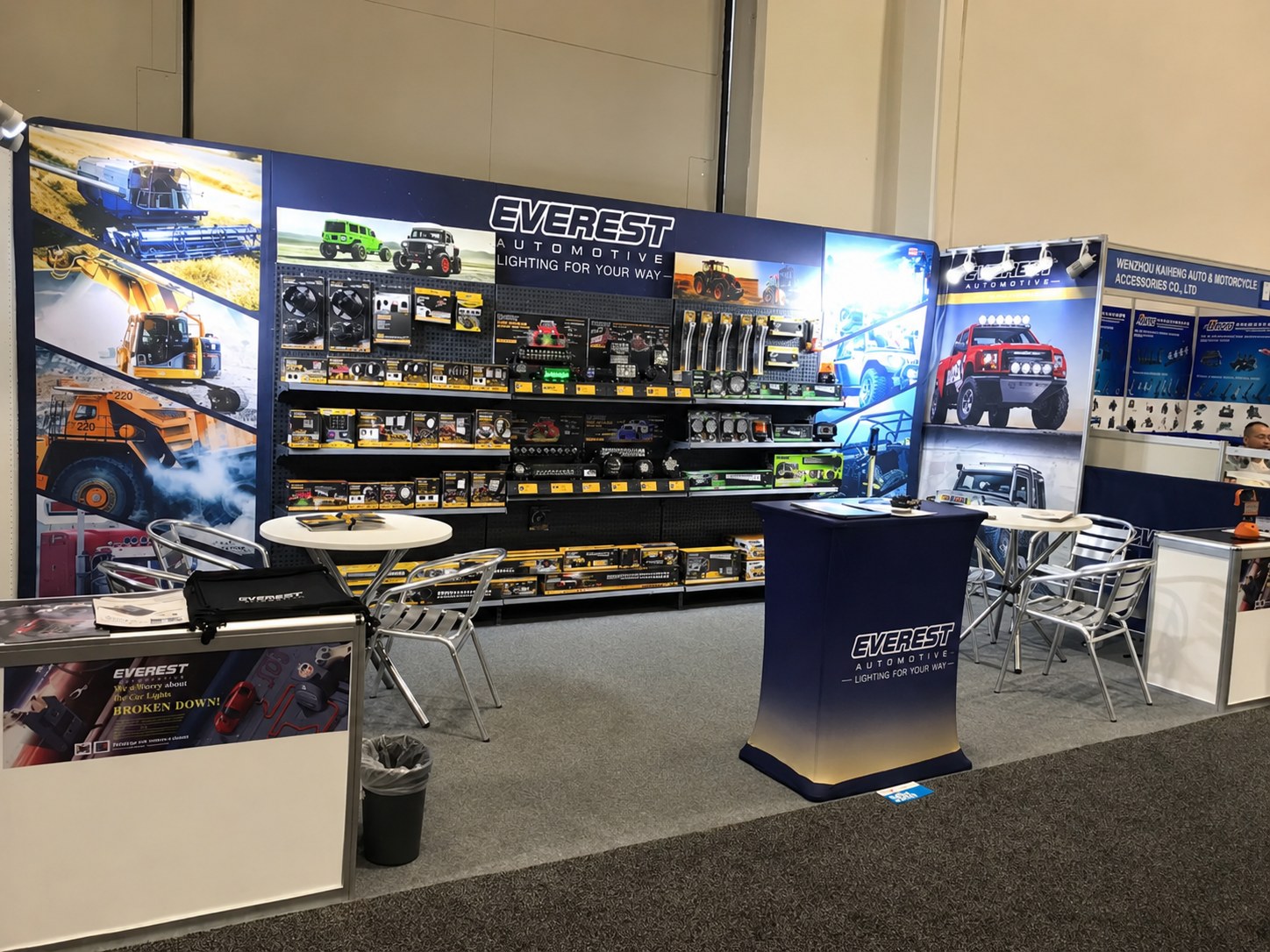
For a lighting buyer, a trade show offers something a product catalogue cannot: the opportunity to compare products in person, discuss requirements with suppliers and see how lighting fits into a wider vehicle or equipment application.
For EVEREST, exhibitions have also been a way to stay connected with the industries we serve. Over the years, our participation in AAPEX, SEMA, bauma Munich and Automechanika Frankfurt has provided opportunities to meet customers, exchange ideas with industry peers and better understand downstream applications.
These four events offer different perspectives. A distributor sourcing replacement lamps may have different priorities from a vehicle builder developing an installation package or an equipment manufacturer selecting work lights.
This guide compares the events from a lighting buyer’s perspective—and explains how to turn a visit into a more useful sourcing discussion.
Four-show comparison · AAPEX · SEMA · bauma Munich · Automechanika Frankfurt · Lighting brands · Buyer’s checklist
Four exhibitions at a glance
On smaller screens, scroll the table sideways to compare all columns.
| Exhibition | Main industry focus | What lighting buyers can investigate |
|---|---|---|
| AAPEX, Las Vegas | Automotive aftermarket products, distribution and service | Replacement demand, supplier product ranges, distribution requirements and aftersales support |
| SEMA, Las Vegas | Specialty equipment, customization, performance and off-road applications | Auxiliary lighting, light bars, installation ideas and vehicle-specific presentation |
| bauma, Munich | Construction machinery, mining machinery, construction vehicles and equipment | Work lights, warning lights, equipment integration and demanding operating environments |
| Automechanika Frankfurt | International automotive aftermarket, components, repair and service | Vehicle lighting, commercial vehicle applications, technical information and international supply relationships |
These are useful starting points rather than fixed boundaries. Product ranges and visitor interests overlap, so buyers should review the relevant edition’s exhibitor directory before planning meetings.
Official product and visitor information is available from AAPEX, SEMA, bauma and Automechanika Frankfurt.
AAPEX: understanding the aftermarket supply chain
AAPEX is particularly relevant when the conversation starts with aftermarket supply: which products a distributor needs, how they will be sold and what information customers require before ordering.
For lighting buyers, a productive meeting can cover more than the lamp itself:
- Which applications and product families does the supplier cover?
- What technical information accompanies each model?
- How are variants identified?
- What packaging, branding and sample arrangements are available?
- How will installation questions and aftersales enquiries be handled?
AAPEX’s Accessories & Lighting section makes lighting part of a broader aftermarket sourcing environment. Buyers can use that setting to evaluate how a lamp range would fit their existing business.
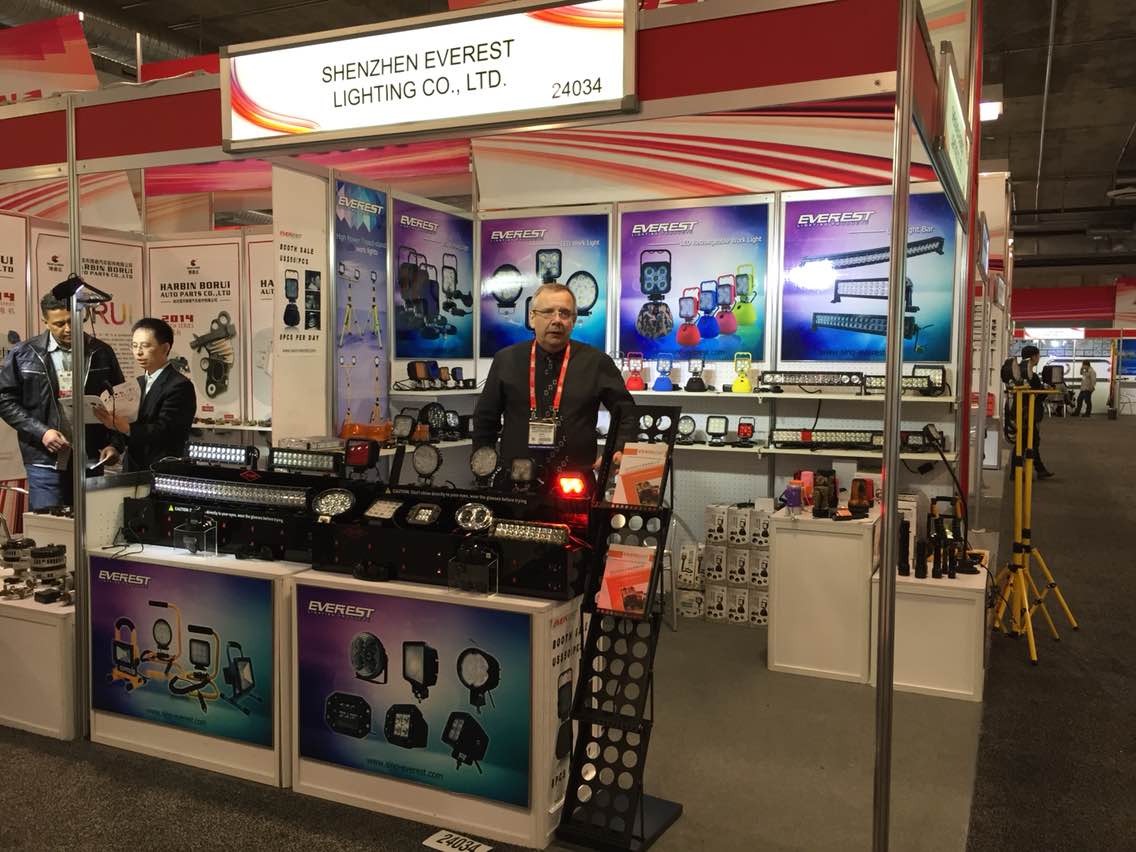
Looking back at our exhibition displays also shows why presenting physical products remains useful. Buyers can compare housing formats, brackets and product sizes together, then identify which models deserve a closer technical review.
SEMA: seeing lighting as part of a vehicle build
SEMA brings a different perspective through specialty equipment, customization and vehicle builds.
A light may look suitable on a display shelf, but its relationship with the vehicle raises further questions. Where will it be mounted? Does it interfere with nearby accessories? Can the cable be routed neatly? Is the installation practical for the workshop or customer?
For buyers of auxiliary lighting, LED light bars and off-road accessories, vehicle displays can help turn an idea into a clearer installation brief.
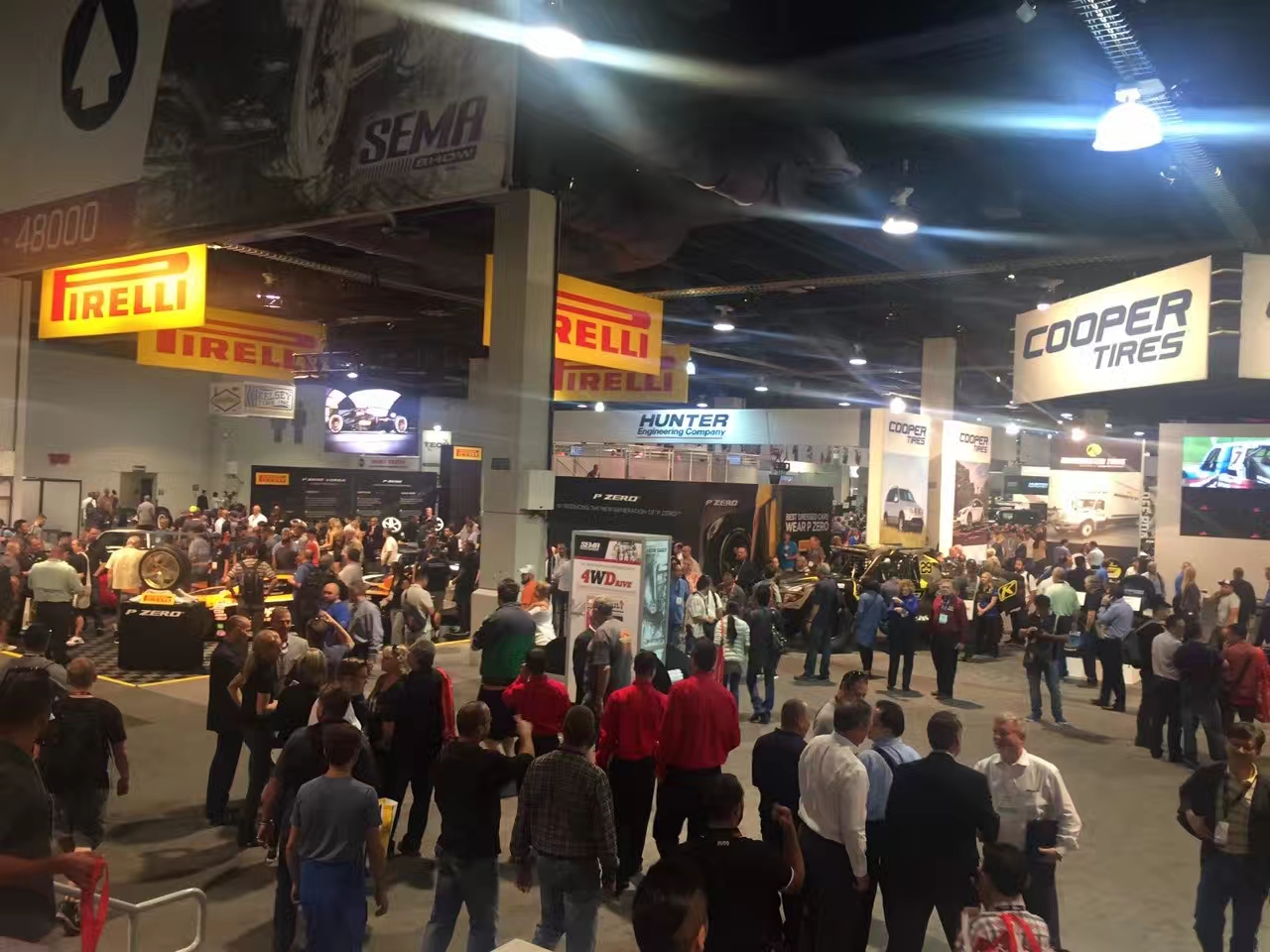
The value of these displays is not limited to appearance. They can prompt practical discussions about bracket design, available space, service access and how a product is supplied as part of a kit.
A display vehicle remains an example to investigate. Buyers should still confirm the intended use, electrical requirements and installation details for their own market and application.
AAPEX or SEMA—which should a lighting buyer prioritize?
The answer depends on the business being developed.
For an importer or distributor building an aftermarket replacement range, AAPEX is a useful starting point for supply-chain and product-range discussions.
For a business developing customization, off-road or accessory packages, SEMA offers a useful setting for exploring vehicle integration and installation ideas.
The events can complement each other. A buyer may investigate an application at one show, then discuss supply, packaging and distribution requirements at the other.
A focused meeting list is more useful than trying to visit every lighting stand. Start with the applications and commercial questions that matter to your business.
bauma Munich: looking beyond the lamp to the machine
For work lights and warning lights, seeing the complete machine can be especially valuable.
bauma covers construction machinery, mining machinery, construction vehicles and equipment. Its exhibition sectors also include lighting-related applications.
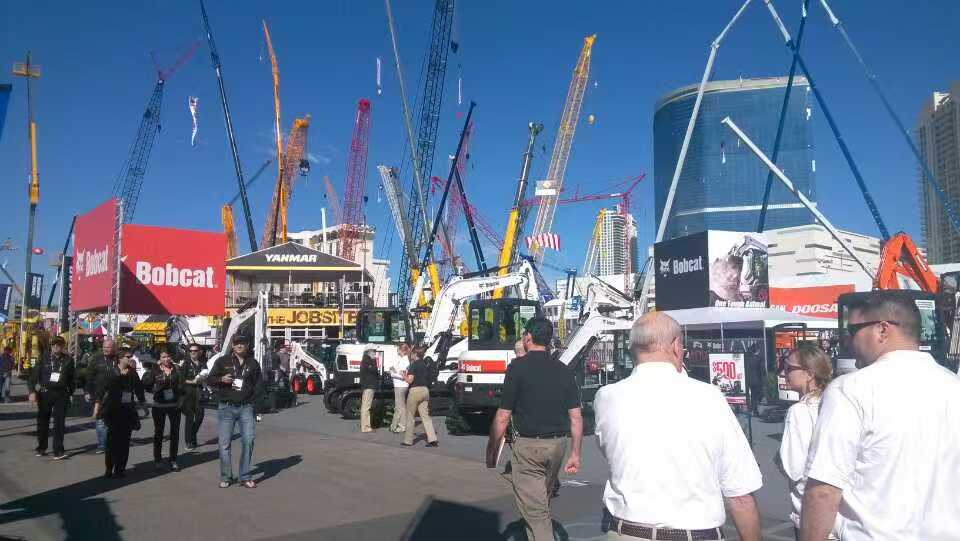
A walk around a machine can reveal selection questions that are difficult to resolve from a lamp photograph alone:
- What must the operator see from the working position?
- Could the machine or attachment cast a shadow?
- Where is there space for a bracket and connector?
- Can the lamp be adjusted and serviced?
- What dust, vibration, weather or washing conditions should be discussed?
These observations help buyers prepare a more complete specification.
For EVEREST, the connection between lighting and downstream equipment is an important reason to follow machinery exhibitions. A work light is one component within a larger installation, and its suitability depends on how that installation is designed and used.
For a practical selection checklist, see our LED work-light buying guide.
Automechanika Frankfurt: connecting product selection with international supply
Automechanika Frankfurt brings together automotive aftermarket products, repair and service businesses. Its product groups include vehicle lighting, electrical systems and commercial vehicle-related applications.
For truck and trailer lighting buyers, it provides a setting for detailed discussions about product coverage and application requirements.
Useful topics include:
- Vehicle models and original part references
- Left- and right-hand lamp variants
- Connector configuration and lighting functions
- Dimensions, mounting arrangements and installation clearance
- Available drawings and supporting documents
- Samples, packaging, branding and repeat supply
The aim is to move from “this lamp looks similar” to a clearly identified model and a list of details to confirm.
Our 24V LED truck rear-light guide explains how vehicle references, connector pin layouts and mounting dimensions contribute to that process.
What established lighting brands can tell us about industry priorities
Exhibitions also offer opportunities to follow the direction of established lighting manufacturers.
For example, FORVIA HELLA’s bauma 2025 presentation included its Smart Link Concept for a connected construction-machine cabin, together with work-lighting and warning-light solutions. It illustrates how lighting can be discussed as part of a wider electronic and machine system. FORVIA HELLA’s official report
OSRAM’s Automechanika Frankfurt 2026 presentation provides another example of an established lighting manufacturer using an aftermarket exhibition to present product developments. OSRAM’s official exhibition page
In North America, Grote listed AAPEX/AWDA in its 2026 exhibition programme, showing the relevance of these events to professional vehicle-lighting suppliers. Grote’s official events page
For buyers, the useful question is what a development means for their own customers: better installation, improved visibility, easier maintenance, additional functionality or more complete technical support.
These examples refer to the stated exhibition editions. They do not imply any affiliation between those brands and EVEREST.
Six questions to ask a lighting supplier at a trade show
1. Which application is this exact model designed for?
Describe the vehicle, equipment and operating task, rather than selecting from appearance alone.
2. What must be checked before installation?
Discuss voltage, connector, dimensions, mounting, functions and wiring requirements.
3. How are the performance figures defined?
Ask about measurement methods and conditions, including whether output figures are theoretical or measured.
4. Which documents are available for this configuration?
Identify the drawings, test information or other documents required for the destination market.
5. How should samples be evaluated?
Agree what the customer needs to check before considering a production order.
6. What information is needed for a meaningful quotation?
Confirm the variant, quantity, packaging, branding, delivery requirements and open technical questions.
Turning an exhibition conversation into a useful next step
A successful meeting should leave both parties with a clear follow-up.
For buyers, that may mean sending vehicle details, connector photographs, mounting measurements or a list of required documents. For the supplier, it may mean preparing a shortlist, clarifying specifications or arranging suitable samples.
EVEREST’s exhibition experience reinforces the value of connecting product discussions with real applications. Seeing the equipment, understanding the sales channel and asking installation questions can make the next sourcing decision more informed.
Whether your business supplies truck and trailer parts, workshop products or machinery lighting, we welcome a discussion about your application.
Share your product category, destination market, installation requirements and estimated quantity with EVEREST. We can review relevant models and discuss the next steps for samples or a trade quotation.